
The Best Hotels in Seoul: From Gangnam to Hongdae

Seoul, one of the world’s most dynamic and expansive cities, boasts an exceptionally competitive hotel landscape. Our curated selection may surprise you—many of our top picks come from globally recognized hotel brands, making them especially appealing for travelers who value loyalty programs and reward points.
Expect breakfasts to be more than just a meal—they’re an experience. Lavish buffet spreads offer an impressive fusion of Asian and Western cuisines, catering to every palate. Fitness facilities at these hotels often rival (or surpass) high-end local gyms, with some even providing complimentary workout attire for guests—so you can travel light without sacrificing your routine. Many of these wellness spaces are also exclusive enough to offer premium memberships to local residents.
Yet beyond the amenities and brand prestige, what truly sets these hotels apart is something less tangible but far more meaningful: authentic Korean hospitality. Thoughtful, warm, and remarkably efficient, the service elevates every stay into something memorable.
Whether you’re visiting Seoul for the first time—ready to dive into K-beauty shopping and treatments—or you’re a seasoned business traveler seeking a refined change of pace, these hotels represent the very best the city has to offer.
How We Chose the Best Hotels in Seoul
Every hotel featured on this list has been personally reviewed by a Jeoung Concierge journalist with deep knowledge of Seoul—someone who has not only visited the city, but experienced each property firsthand.
In curating our selection, our editors look beyond price alone. We carefully consider hotels across a range of budgets that deliver a truly authentic and insider perspective of the destination. Key factors include thoughtful design, prime location, exceptional service, and a commitment to sustainability.
The result is a collection of hotels that don’t just offer a place to stay—but provide a meaningful and memorable experience of Seoul itself.


Four Seasons Hotel Seoul
No matter which Four Seasons property I visit, the atmosphere upon arrival is consistently the same—classy and calm—and the Four Seasons Hotel Seoul is no exception. In the gleaming lobby, the brand’s signature scent—a warm and woody fragrance reminiscent of two of my favorites, Comme des Garçons’ Wonderwood and Odin New York’s 07 Tanoke—greeted me. My eyes were then drawn to the striking artworks, including Kim Jong Gu’s Water, Rock, Pine, Bamboo, Moon—a towering steel powder painting inspired by calligraphy. The space was filled with a label-loving mix of South Koreans and international guests—many flaunting Hermès baby Birkins and Dior Book Totes—lounging on benches or checking in and out. Despite the buzz, the atmosphere remained relaxed. If there’s one thing I can always count on with the Four Seasons, it’s that their well-trained staff know how to manage even the most persnickety guests.


JW Marriott Dongdaemun Square Seoul
Opened over a decade ago, JW Marriott Dongdaemun Square Seoul holds the distinction of being the first JW Marriott property in South Korea. Yet despite its global brand pedigree, the hotel feels refreshingly intimate—more boutique than corporate—with just 170 thoughtfully designed rooms and suites.
At first glance, the lobby’s polished marble and refined symmetry echo the familiar language of luxury hotels across Seoul. But look closer, and subtle artistry begins to emerge—most notably the shimmering installation by Korean artist Bahk Seon Ghi, delicately suspended overhead in strands of acrylic and nylon, adding a quiet sense of movement and depth.
The true moment of impact, however, comes as you approach the grand marble reception desks. Beyond them, the view unfolds—framing Dongdaemun in all its historic gravity. Known formally as Heunginjimun Gate, this landmark is one of only two surviving gates from the original fortress walls that once encircled Seoul. Having withstood centuries of upheaval, including the Japanese occupation, it stands today as a powerful symbol of resilience and national identity.
It’s this rare juxtaposition—modern luxury set against profound history—that defines the experience here. A stay at JW Marriott Dongdaemun isn’t just about comfort; it’s about being quietly connected to Seoul’s past, present, and enduring spirit.


Grand Hyatt Seoul
Originally opened in 1978 as the Hyatt Regency and later reimagined as the Grand Hyatt in 1993, this iconic property reflects South Korea’s rise onto the global stage. More than just a hotel, it carries a sense of history—one that parallels the country’s transformation into a modern economic powerhouse.
What sets Grand Hyatt Seoul apart is its scale and setting. Sprawled across 23 acres of beautifully landscaped grounds, it feels less like a city hotel and more like a serene urban resort tucked into the slopes of Namsan. The space alone offers a rare sense of calm in the middle of Seoul’s fast-paced energy.
Its amenities are equally impressive. At the heart of it all is Club Olympus, a vast wellness complex complete with saunas, tennis courts, and an outdoor pool that famously transforms into an ice skating rink during the winter months. It’s this versatility that makes the hotel equally appealing to business travelers, international dignitaries—every U.S. president since George H.W. Bush has stayed here—as well as tourists and locals seeking a luxurious staycation.
Dining is another highlight, with eleven restaurants and bars offering everything from refined indulgence to relaxed bites. Sip cocktails to the sound of live jazz at The Paris Bar, browse artisanal treats and wines at The Deli, or explore the hotel’s own culinary enclave along 322 Sowol-ro. My personal favorite is Kauri, a sophisticated Japanese dining spot tucked within this “food alley,” perfect for an elevated yet intimate evening.
At Grand Hyatt Seoul, it’s not just about where you stay—it’s about the space, the history, and the effortless balance between city life and retreat.


Josun Palace, a Luxury Collection Hotel, Seoul Gangnam
In recent months, a moody, romantic, retro aesthetic—reminiscent of In the Mood for Love—has taken over TikTok. Few places in Seoul capture that same cinematic allure quite like Josun Palace. While the film unfolds in 1960s Hong Kong, this hotel—newly opened and set high within a 36-story tower in Gangnam—channels a similarly stylized, evocative glamour.
From the moment you arrive, the atmosphere feels almost theatrical. Elevators glide you up to the 25th-floor reception, where an impeccably trained team anticipates every need with effortless precision—from securing restaurant reservations to arranging childcare. The interiors, awash in deep greens, gold accents, and midcentury-modern influences, create a space that feels both distinctly Korean and timelessly elegant.
Walking through the hotel, it’s easy to feel like you’ve stepped into a scene. Even during a family stay, the mood lends itself to imagination—perhaps a quiet romance, or a story of intrigue unfolding against Seoul’s glittering skyline. Guest rooms, while not oversized, are thoughtfully designed, offering refined comfort and stunning panoramic views. On the eastern side, the silhouette of Lotte World Tower rises in the distance, anchoring the cityscape day and night.
The cinematic experience reaches its peak at Eatanic Garden, the hotel’s Michelin-starred progressive Korean restaurant led by Son Jong-won. Here, dining becomes storytelling. Each dish arrives as part of a carefully choreographed sequence—playful, artistic, and deeply intentional. From barley tea presented like a floral arrangement to intricately plated bites accompanied by narrative cards, the meal unfolds like a journey.
By the time you leave, there’s a distinct feeling—not just of having stayed somewhere luxurious, but of having experienced something immersive. As if, in some small way, you were part of a beautifully shot film—one that lingers long after the credits roll.


Park Hyatt Seoul
The arrival at Park Hyatt Seoul is deliberately understated—almost unexpectedly so. You enter through a relatively compact, utilitarian ground-level space, with little hint of what’s to come. But once you ascend to the lobby on the 24th floor, the experience transforms entirely.
Suddenly, everything opens up. Soaring ceilings, abundant natural light, and sweeping panoramic views of Gangnam create an immediate sense of calm and elevation—both literally and emotionally. The space is further enriched by striking contemporary Korean artworks, giving the hotel a refined, gallery-like atmosphere. Reception is seamless: warm, precise, and quietly attentive.
From there, a second set of elevators takes you to your room, reinforcing the feeling that you’re embarking on a private, elevated retreat above the city. Rooms are defined by floor-to-ceiling windows, minimalist design, and a deep sense of tranquility—perfectly framing the dynamic skyline of Seoul.
Designed by the renowned Japanese architecture firm Super Potato, the hotel reflects a philosophy of understated luxury—natural materials, clean lines, and thoughtful spatial flow. It’s a style that feels both timeless and distinctly urban.
Despite its serene ambiance, Park Hyatt Seoul is deeply connected to the energy of Gangnam. It functions as a sophisticated hub where travelers and locals intersect—whether over dinner, drinks, or meetings. Just steps away, the COEX complex offers shopping, exhibitions, and entertainment, while the Galleria Department Store is only a short distance away.
The presence of a rooftop helipad offers a subtle clue to its clientele, but the real appeal lies in its balance: tranquil yet central, minimalist yet luxurious. It’s easy to argue that Park Hyatt Seoul isn’t just one of the best hotels in Gangnam—it may well be the chicest address in Seoul’s most stylish neighborhood.









Conrad Seoul
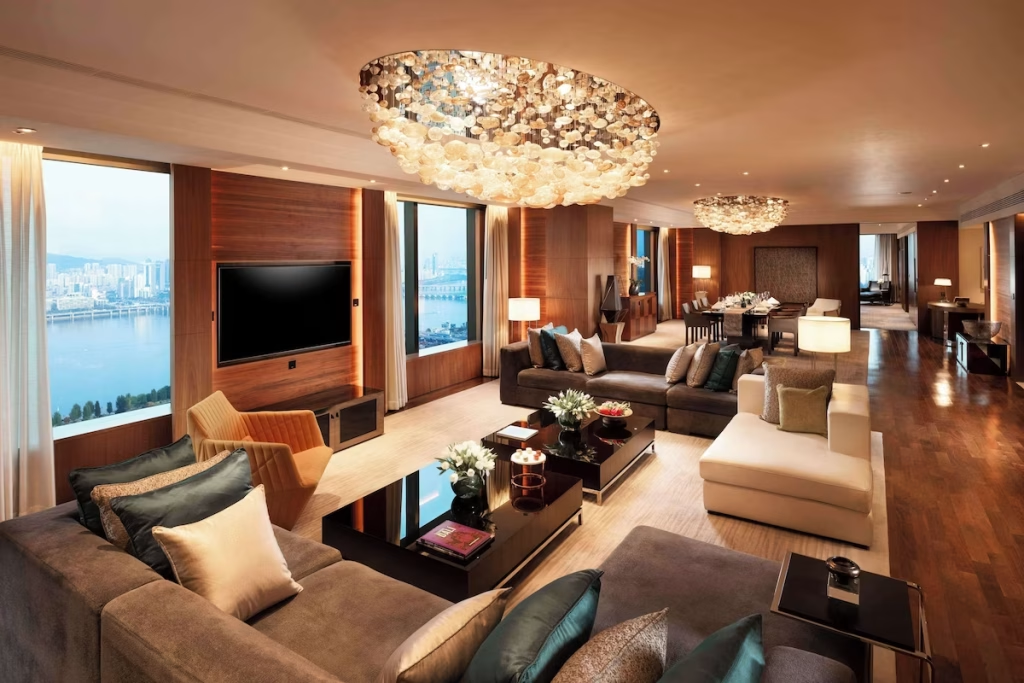
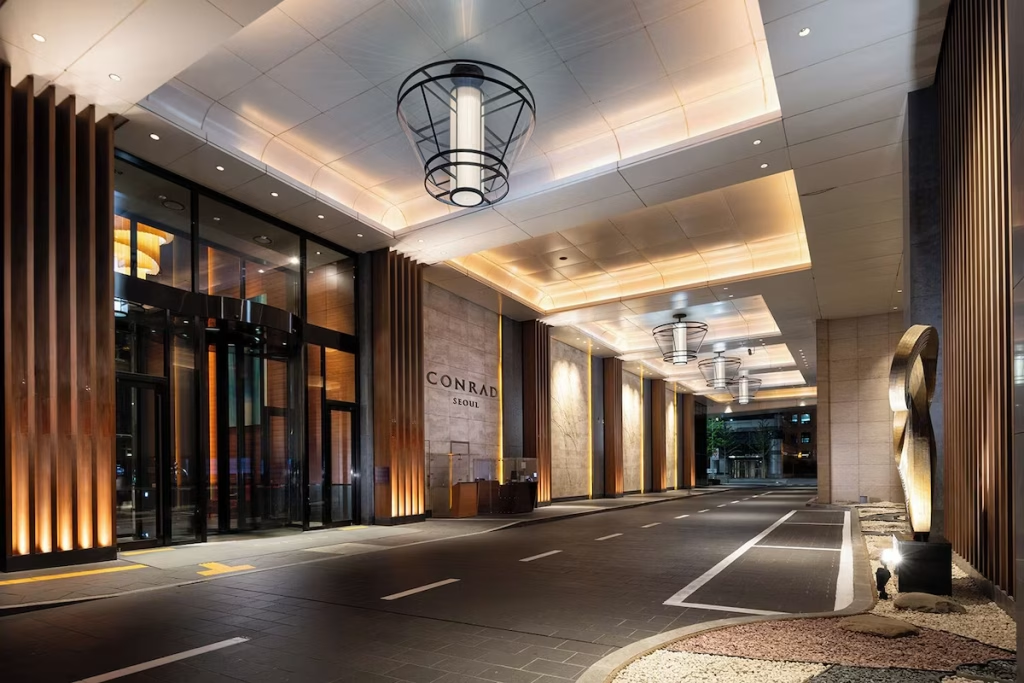
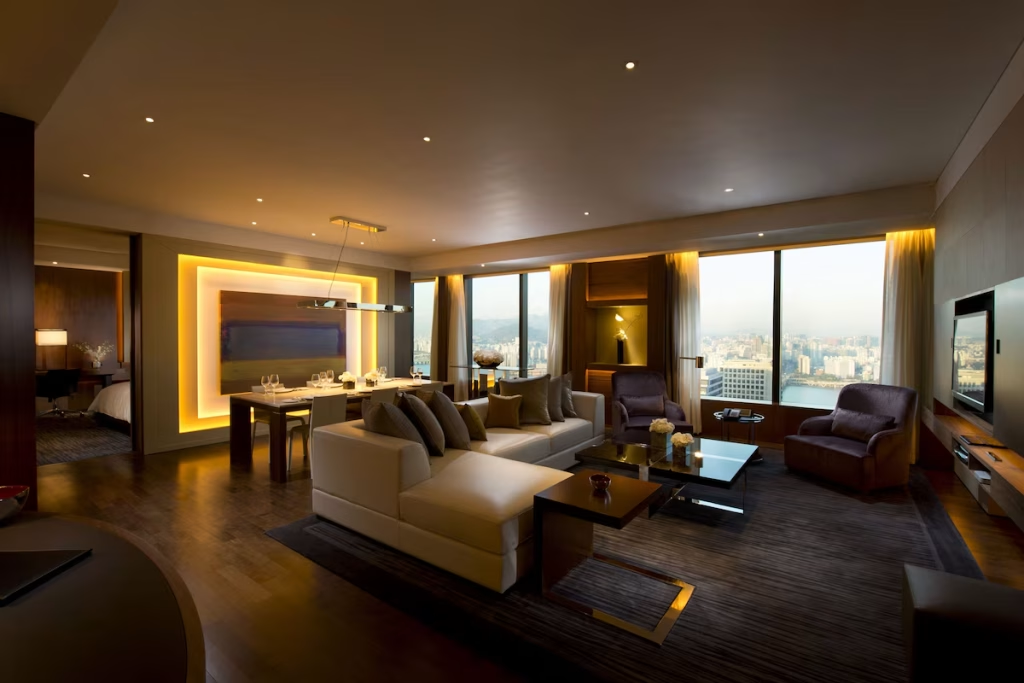
At first glance, Conrad Seoul feels unmistakably business-focused. The steady flow of suited professionals and airline crews—often fresh off long-haul flights—gathering at its expansive porte-cochère speaks to its reputation as a go-to address for corporate travelers.
Step inside, however, and the atmosphere shifts. The vast lobby, with its gleaming marble floors, dramatic spiral staircase, and floating ginkgo-leaf-inspired glass chandeliers, exudes a sleek, almost museum-like elegance. It’s a space that feels just as appealing to leisure guests as it does to those in town for meetings.
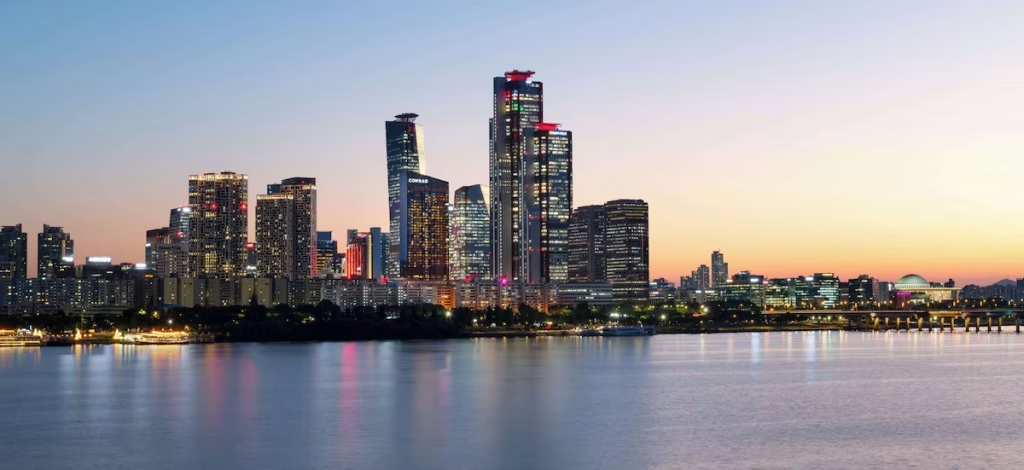
Located in Yeouido—traditionally Seoul’s financial district—the hotel sits at the center of an area that has rapidly evolved into a lifestyle destination. A key catalyst was the opening of The Hyundai Seoul in 2021, now one of the city’s most talked-about retail and cultural spaces. Guests can access it directly from the hotel via an underground passage, making it effortlessly convenient.
The neighborhood’s appeal extends outdoors as well. Yeouido Hangang Park has become a favorite for both locals and visitors—especially for relaxed evenings by the river, often with instant ramen in hand from nearby convenience stores, a uniquely Korean pastime.
The hotel is also seamlessly connected to IFC Mall, home to global brands like Apple, Olive Young, and Chanel, adding another layer of convenience and entertainment.
For international travelers, Conrad Seoul offers a practical advantage as well—it’s the closest luxury hotel to both of Seoul’s major gateways, Incheon International Airport and Gimpo International Airport.
Balancing efficiency with style, Conrad Seoul is more than just a business hotel—it’s a polished, well-connected base for experiencing a different, more modern side of the city.
About the Author
Natalia Kim
Natalia Kim is a freelance writer based in Brooklyn. She got her start as a contributor for T: The New York Times Style Magazine, and covers travel, food, culture, and wellness for a variety of outlets, including Food & Wine, Travel + Leisure, Forbes, and more. Korea, pizza, and rescue dogs are her greatest loves.

